How to Pack a Suitcase for One Week Without Overpacking
Pack a compact capsule: versatile tops, repeatable bottoms, underwear, socks, sleepwear, one adaptable layer, comfortable shoes, toiletries, documents, medication, and weather-specific items. Plan outfits before packing, use compartments, and remove anything that serves only one low-probability purpose.
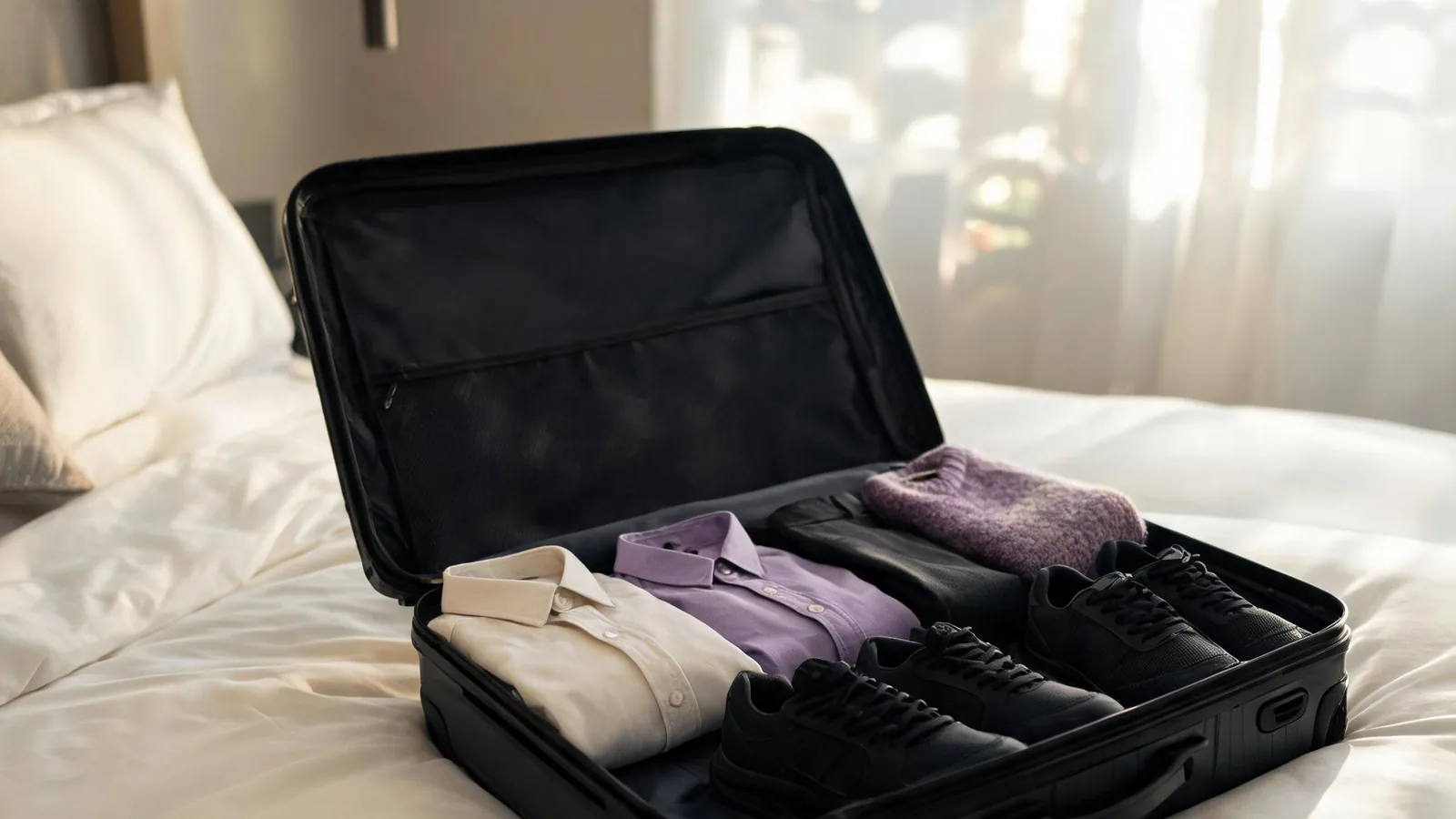
Build a one-week packing list around outfit combinations
Start with a small capsule rather than seven separate outfits. Choose a restrained color palette, such as navy, cream, black, and denim, then select tops and bottoms that work together. A practical starting list is several tops, two or three bottoms, underwear and socks for the trip, sleepwear, one light layer, and shoes suited to the main activity.
Adjust the list to the itinerary. Business travel needs a polished jacket or dress and shoes that work for meetings. Warm destinations favor breathable tops, light bottoms, swimwear, and sun protection. Cold destinations need insulating layers, a weatherproof outer layer, and footwear that tolerates the conditions. Rainy trips justify a compact shell or umbrella; beach trips justify swimwear and a quick-dry cover-up.
Use a day-by-day outfit matrix before packing. Write the planned daytime outfit, evening option, and required shoes for each day. Reuse a bottom with different tops, and reserve an occasion-specific garment only when the itinerary contains a dinner, ceremony, meeting, or other event that requires it. A capsule wardrobe emphasizes a small collection of versatile garments.
Keep the plan flexible rather than packing one item per day. Layering helps you adjust clothing to changing conditions, while a washable favorite can extend a limited selection when laundry is available.[2][4][3]
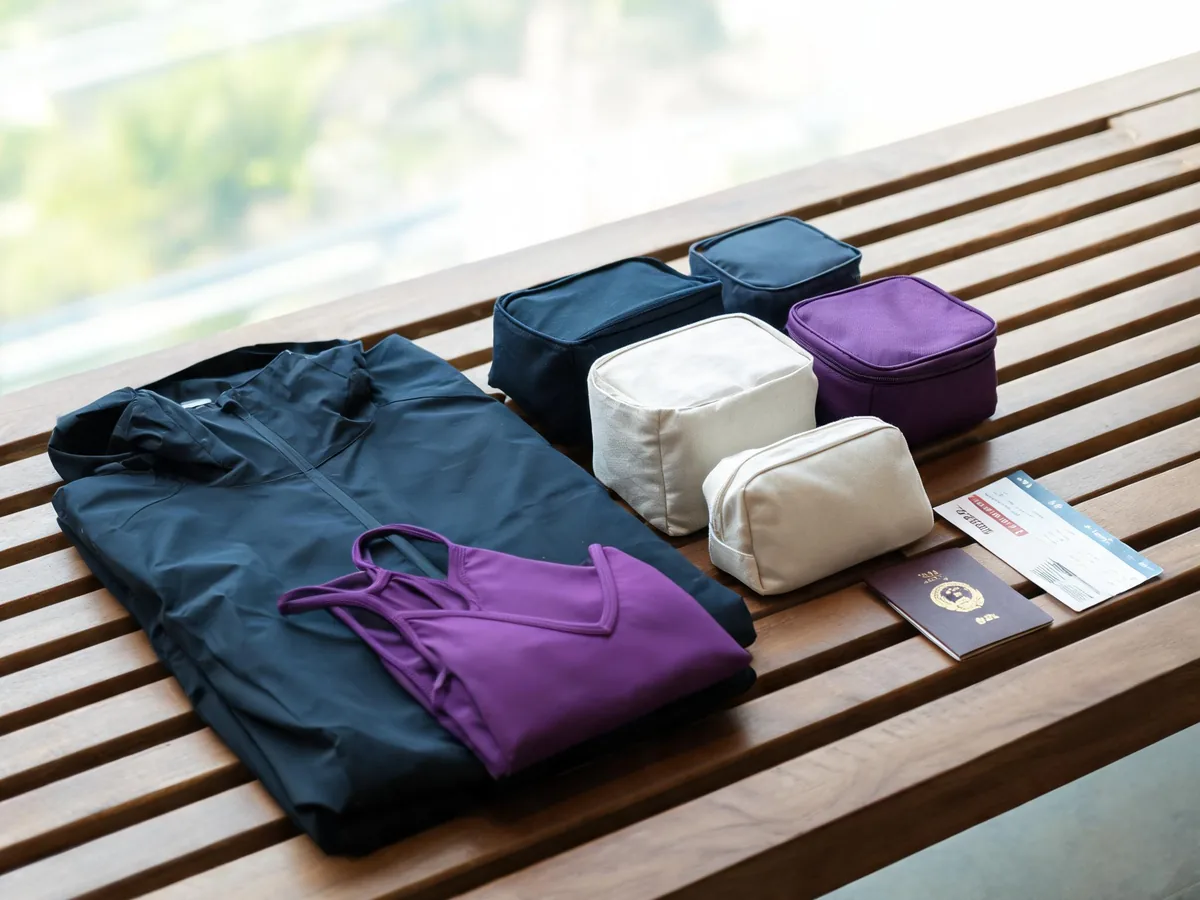
Choose fabrics and layers for the destination
Use a light base layer, a mid-layer, and an outer layer when temperatures may change. A wool layer can provide warmth while helping manage moisture, making it useful for cool transit days or variable weather. Pack the layer only when it fits several planned outfits.
For hot weather, prioritize breathable tops, lightweight bottoms, and sandals or walking shoes that suit the itinerary. For cold weather, substitute insulating tops, warm socks, a compact mid-layer, and weather-appropriate footwear. For business travel, keep the palette coordinated so one jacket or polished layer works across several looks.
Treat footwear as a space decision. Wear the bulkiest suitable pair during transit and pack only shoes with distinct jobs, such as formal wear, walking, or water. Test every packed shoe against at least two planned outfits before it earns space.[6][4]
Organize the suitcase by access and function
Choose luggage that fits your airline allowance and trip needs, then check the carrier's current size and weight rules before leaving. A suitcase is designed to organize and protect personal belongings during travel; separate compartments can help keep categories easier to find.
Keep the first-day outfit, sleepwear, medication, documents, and chargers accessible rather than buried beneath the rest. Put items that may be needed during transit near the opening, and group small accessories in a pouch so searching does not disturb the main clothing stack.
Use a simple pack-or-remove test: if an item matches no planned outfit, duplicates another item without a clear benefit, or is intended for an unlikely event, remove it. Keep an item when it solves a specific weather, work, health, or activity need.[5]
Use Alvin's Club to narrow outfit choices before packing
Alvin's Club is a fashion agent that helps people discover and choose what to wear. Use it as a decision aid before packing: provide your destination, expected conditions, itinerary, preferred colors, dress requirements, and garments you already own, then review the resulting outfit ideas against your actual suitcase space.
Treat those details as user inputs to guide discovery, not as verified claims about a specific automated feature. Select a few compatible looks, build the packing list from shared garments, and remove pieces that appear in only one low-priority outfit. This keeps the tool's role focused on outfit discovery while you make the final luggage and airline decisions.[1]
| Trip condition | Prioritize | Space tradeoff |
|---|---|---|
| Business itinerary | Polished layer, coordinated tops, formal shoes | Reduce casual duplicates |
| Warm weather | Breathable tops, light bottoms, swimwear | Skip heavy layers |
| Cold weather | Insulating layers, warm socks, weatherproof outer layer | Wear the bulkiest layer in transit |
| Rain or beach | Weather protection, suitable footwear, activity layer | Remove low-use occasion pieces |
Frequently asked questions
Should I fold or roll clothes for a one-week trip?
Choose the method that lets you see and retrieve items without unpacking everything. Fold structured pieces and bulky layers where creases matter; roll soft casual pieces when that arrangement uses the available space well. The useful rule is accessibility, not loyalty to one method.
How many outfits should I plan for one week?
Plan the actual itinerary first, then build several combinations from shared tops, bottoms, and layers rather than assigning one unique outfit to every day. Add a formal or activity-specific look only when the schedule requires it, and account for laundry access before increasing quantities.[2][3]
What changes for carry-on-only packing?
Check the airline's current size and weight limits, wear the heaviest suitable shoes and layer, choose a compact palette, and remove items that serve one uncertain purpose. Keep medication, documents, chargers, and the first-day outfit easy to reach.[5]
What should I pack for cold weather?
Build around layers: a base layer, a warm mid-layer, and weather protection. Wool can provide warmth while helping manage moisture. Choose footwear for the conditions and wear the bulkiest suitable layer during transit when practical.[6][4]
How can Alvin's Club help before I pack?
Use Alvin's Club to discover and choose outfit ideas, then provide practical context such as destination, expected conditions, itinerary, dress code, colors, and garments you own as inputs for your review. Keep only combinations that fit the trip and suitcase.[1]
Sources
- Alvin's Club official website — Alvin's Club
- Capsule wardrobe — Wikipedia
- Laundry — Wikipedia
- Layered clothing — Wikipedia
- Suitcase — Wikipedia
- Wool — Encyclopaedia Britannica